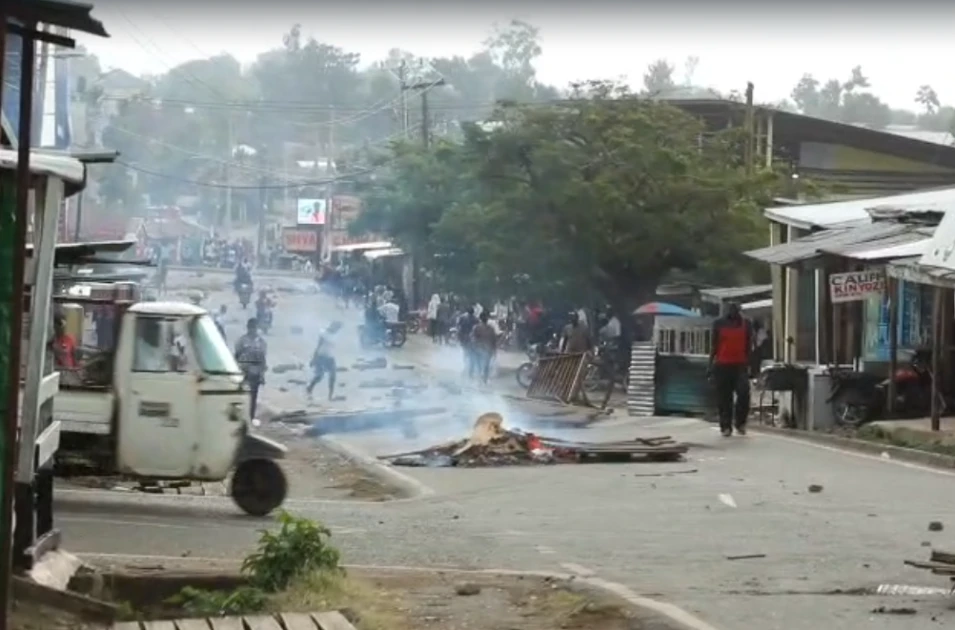
On Sunday, August 16, 2026, Homa Bay witnessed scenes that should trouble every Kenyan. Burning tyres, blocked roads, and confrontations between rival groups turned what was meant to be a political gathering into a day of fear and disruption. These images are not just another episode of political drama; they are a stark reminder of how fragile peace can be when politics is reduced to intimidation rather than ideas.
The Events in Homa Bay
The Linda Mwananchi activities had already generated tension before the rally. Authorities had warned that anyone facilitating violence would face the law, yet reports emerged of roads being blocked and tyres set alight. Allegations followed that Siaya Governor James Orengo’s convoy was attacked by armed youths, forcing it to retreat. Whether these claims are proven or not, the fact remains: the atmosphere was charged, businesses were disrupted, and ordinary citizens paid the price for political battles they did not start.
Youths as Political Ammunition
Perhaps the most painful aspect of the Homa Bay saga is the role of young people. Kenya’s youth are not born political goons. They are young men and women grappling with unemployment, poverty, and lack of opportunity. When offered money to attend rallies, intimidate opponents, or cause chaos, the immediate reward may seem attractive. But the long‑term cost is devastating: arrests, injuries, deaths, and a cycle of fear that undermines their future.
Implications for the 2027 Elections
As Kenya heads toward the 2027 General Election, the Homa Bay incident should be treated as a warning. Legal organizations have already raised concerns that political violence and intimidation could become normalized if not addressed early. If one side recruits youths to block opponents, the other side will eventually feel compelled to do the same. This creates a political arms race where elections are no longer about who has the best ideas but about who can mobilize the most intimidating crowd.
The Role of Security Agencies
The National Police Service has repeatedly warned that anyone facilitating violence will face the law. But warnings must be matched with action. If goons are identified, they should be arrested. If politicians are found financing violence, they must be prosecuted regardless of affiliation. And if allegations against leaders are false, investigations should establish that clearly. Justice must not be selective, because selective justice erodes trust in institutions and fuels further division.
The Hidden Costs of Violence
Political violence does not end when the rally disperses. Fear lingers, businesses close, transport is disrupted, and communities are left divided. Kenya’s economy, security, and social cohesion are too important to be sacrificed for political competition. Violence breeds fear, fear breeds retaliation, and retaliation breeds hatred, a cycle that can last long after elections are over.
A Call for Reflection
The Homa Bay saga should be a turning point. It should force us to ask difficult questions:
- Who is recruiting these youths?
- Who is financing them?
- Why do leaders tolerate violence instead of competing through ideas?
- What kind of Kenya are we preparing for our children?
The answer cannot be a Kenya where businesses shut down because of rallies, where leaders need security escorts to travel, or where young men are turned into weapons for political ambition. Kenya must reject political goonism before it becomes entrenched in the system.