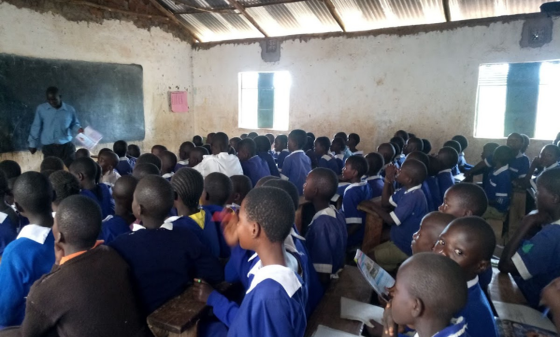
Congestion in schools has become a major challenge facing Kenya’s education system, particularly in public primary and secondary schools where rising student enrolment has not always been matched by adequate classrooms, sanitation facilities, furniture, laboratories and libraries.
Overcrowding affects the quality of learning, puts pressure on teachers and school facilities, and can negatively influence students’ health, concentration and academic performance.
The problem is particularly visible in rural areas and densely populated informal settlements, where schools often struggle to accommodate growing numbers of learners with limited infrastructure.
What Is Congestion in Schools?
School congestion refers to a situation where the number of students using available educational facilities exceeds the capacity for which those facilities were designed.
It occurs when schools have too many students competing for limited classrooms, desks, toilets, laboratories, libraries, teachers and other learning resources.
In Kenya, school congestion has been influenced by increased enrolment following the introduction of Free Primary Education (FPE) in 2003 and Free Day Secondary Education (FDSE) in 2008.
While these programmes significantly improved access to education, infrastructure development has not always kept pace with the growing number of learners.
Overcrowded Classrooms in Kenyan Public Schools
One of the most visible effects of inadequate school infrastructure is overcrowded classrooms.
Classrooms that were originally designed to accommodate approximately 40 to 50 students can sometimes be forced to accommodate significantly larger numbers.
In severely congested schools, classrooms may have 60, 80 or even 100 learners, creating difficult conditions for both teachers and students.
Such overcrowding makes it difficult for students to concentrate and participate effectively in lessons.
Teachers also face challenges moving around classrooms, monitoring individual learners and providing personalised assistance.
The situation can be particularly difficult for students who require additional academic support.
Shortage of Classrooms Forces Students to Learn in Poor Conditions
The shortage of classrooms remains another major infrastructure challenge.
In some schools, particularly in rural and informal urban settlements, the available classrooms are insufficient to accommodate all enrolled students.
As a result, learners may be forced to study in temporary structures, open spaces or, in extreme circumstances, under trees.
Learning in such environments exposes students to weather conditions and other distractions.
Rain, excessive heat, dust and noise can interfere with lessons and make it difficult for teachers to maintain a productive learning environment.
The shortage of classrooms can also force schools to introduce shift systems, reducing the amount of time students spend in classrooms each day.
Inadequate Desks and Furniture
Congestion is further worsened by inadequate desks and other classroom furniture.
When the number of students exceeds the available furniture, learners may be forced to share desks or sit on floors.
Poor seating arrangements can make learning uncomfortable and affect students’ posture and concentration.
Students who spend long periods sitting in uncomfortable positions may become distracted and less engaged during lessons.
Adequate furniture is therefore an essential component of creating a suitable learning environment.
Inadequate Toilets and Sanitation Facilities
School congestion also puts enormous pressure on sanitation facilities.
The recommended pupil-to-toilet ratio is designed to ensure that learners can access sanitation facilities without excessive queues or compromising hygiene.
However, some congested schools have far more students sharing available toilets than the recommended standards allow.
Large numbers of students using a limited number of toilets can result in:
- Long queues during breaks
- Reduced learning time
- Poor sanitation
- Increased pressure on school facilities
- Poor hygiene
- Greater risk of disease transmission
The problem becomes even more serious where schools lack reliable access to clean water.
Lack of Clean Water Worsens School Congestion
Water is essential for maintaining hygiene in schools.
Without adequate clean and reliable water supplies, students may struggle to wash their hands, clean sanitation facilities and maintain basic personal hygiene.
Poor water and sanitation conditions can contribute to illness, which may increase student absenteeism.
When students frequently miss lessons because of preventable illnesses, their academic progress can suffer.
Schools therefore need adequate water infrastructure alongside classrooms, toilets and other learning facilities.
Overcrowding Overwhelms Teachers
The effects of school congestion are not limited to students.
Teachers are also significantly affected by overcrowded classrooms.
A teacher handling a class of 80 or 100 students faces a much greater workload than one teaching a smaller class.
Large classes make it difficult to:
- Monitor individual students
- Mark assignments effectively
- Identify struggling learners
- Provide individual feedback
- Maintain classroom discipline
- Conduct practical activities
- Engage every student in discussions
Excessive workloads can also contribute to teacher stress and burnout.
Congestion Limits Practical Learning
Practical subjects such as science and technology require adequate laboratories, equipment and learning space.
However, many schools face shortages of functional science laboratories and other specialised facilities.
Even where a school has a laboratory, the facility may be too small to accommodate an entire class at once.
Students may consequently have limited opportunities to conduct experiments and gain hands-on experience.
The shortage of functional libraries presents a similar challenge.
A small library cannot effectively serve hundreds of students who need access to textbooks, reference materials and other learning resources.
Lack of Libraries Affects Research and Reading
Libraries play an important role in developing students’ reading, research and independent learning skills.
When schools lack adequate libraries, students have fewer opportunities to access additional educational materials beyond classroom instruction.
Congestion can make the situation worse because even an existing library may not have enough space or resources to accommodate large numbers of students.
Investing in larger, properly equipped libraries can therefore help schools create better opportunities for independent learning.
Effects of School Congestion on Academic Performance
Inadequate infrastructure can negatively affect educational outcomes.
Students who learn in overcrowded and uncomfortable environments may experience:
- Reduced concentration
- Increased stress
- Lower motivation
- Poor participation
- Reduced access to learning materials
- Limited practical learning opportunities
- Increased absenteeism
- Poor academic performance
The quality of the learning environment plays an important role in determining how effectively students engage with their education.
A school with adequate classrooms, furniture, sanitation, laboratories, libraries and teaching resources is better positioned to support positive academic outcomes.
School Congestion and Student Health
Overcrowding can also create health challenges.
When large numbers of students share limited sanitation facilities and classrooms, maintaining hygiene becomes more difficult.
Poor ventilation and crowded classrooms can also create uncomfortable learning conditions.
Combined with inadequate water and sanitation infrastructure, overcrowding can increase the risk of illness and absenteeism.
A healthy learning environment therefore requires more than teachers and textbooks. It also requires adequate physical infrastructure.
Rural and Informal Schools Face Greater Infrastructure Challenges
Infrastructure shortages are particularly significant in some rural communities and densely populated informal settlements.
Population growth can increase demand for education faster than new schools and classrooms can be constructed.
Schools serving low-income communities may also face difficulties obtaining adequate resources for infrastructure development.
This creates disparities in learning conditions between schools with sufficient infrastructure and those operating under severe constraints.
Addressing these disparities is essential if Kenya is to provide equitable access to quality education.
How Kenya Can Address School Congestion
The government and other education stakeholders can implement several measures to address overcrowding and infrastructure shortages.
1. Build More Classrooms
The government should increase investment in classroom construction, particularly in schools experiencing severe overcrowding.
Infrastructure development should be guided by enrolment figures and projected population growth to ensure that new classrooms are constructed where they are most needed.
2. Expand Sanitation Facilities
Schools should have sufficient toilets and sanitation facilities to serve their student populations.
Construction programmes should also include reliable water supplies, handwashing facilities and proper waste-management systems.
3. Invest in Laboratories and Libraries
More funding should be directed towards functional science laboratories, libraries and other specialised learning spaces.
Schools should also receive adequate equipment and learning materials so that students can benefit from practical and research-based learning.
4. Provide Adequate Desks and Furniture
Every learner should have access to appropriate classroom furniture.
Government programmes and other education initiatives should ensure that infrastructure development includes desks, chairs and other essential classroom equipment.
5. Strengthen Digital Infrastructure
Investment in computers, tablets, internet connectivity and digital learning platforms can complement traditional classroom learning.
Digital infrastructure cannot completely replace physical classrooms, but it can provide additional learning resources and enable students to access educational materials beyond their immediate school facilities.
Technology can also help prepare learners for a rapidly changing digital economy.
6. Improve Accountability in Infrastructure Projects
Public funds allocated to school construction should be properly monitored.
Strengthening transparency and accountability in infrastructure projects can help ensure that funds intended for classrooms, laboratories, toilets and other facilities are used for their intended purposes.
Reducing wastage and corruption would allow more resources to reach schools and increase the number of infrastructure projects completed.
7. Use Data to Plan School Infrastructure
Education authorities should use accurate enrolment and population data when planning new infrastructure.
Schools experiencing rapid growth should be identified early so that classrooms, sanitation facilities, laboratories and teachers can be provided before congestion becomes severe.
Government Funding for School Infrastructure
School infrastructure should remain a priority in national and county development planning.
Increasing investment in education infrastructure would help Kenya respond to rising enrolment while improving the quality of learning environments.
Infrastructure funding should not focus exclusively on classrooms.
A comprehensive approach should cover:
- Classrooms
- Desks and furniture
- Toilets
- Clean water
- Libraries
- Science laboratories
- ICT facilities
- Teachers’ facilities
- Electricity
- Internet connectivity
- Disability-friendly infrastructure
Such investment would create more conducive environments for both teaching and learning.
Conclusion
Congestion caused by inadequate infrastructure remains a serious challenge for Kenya’s education system.
The expansion of access to education through initiatives such as Free Primary Education and Free Day Secondary Education has enabled more children to attend school, but increased enrolment must be matched by adequate investment in physical infrastructure.
Overcrowded classrooms, inadequate desks, insufficient toilets, limited water supplies, poorly equipped laboratories and small libraries can undermine the quality of education.
The effects extend beyond academic performance. Poor infrastructure can affect student health, motivation, concentration and attendance while increasing pressure on teachers.
Addressing the problem requires sustained investment in classrooms, sanitation facilities, clean water, furniture, laboratories, libraries and digital infrastructure.
The government should also strengthen accountability and transparency in education infrastructure projects to ensure that allocated funds translate into completed and functional facilities.
Ultimately, expanding access to education is only one part of the equation. Kenya must also ensure that students learn in safe, adequately equipped and uncongested schools where both teachers and learners have the space and resources needed to succeed.