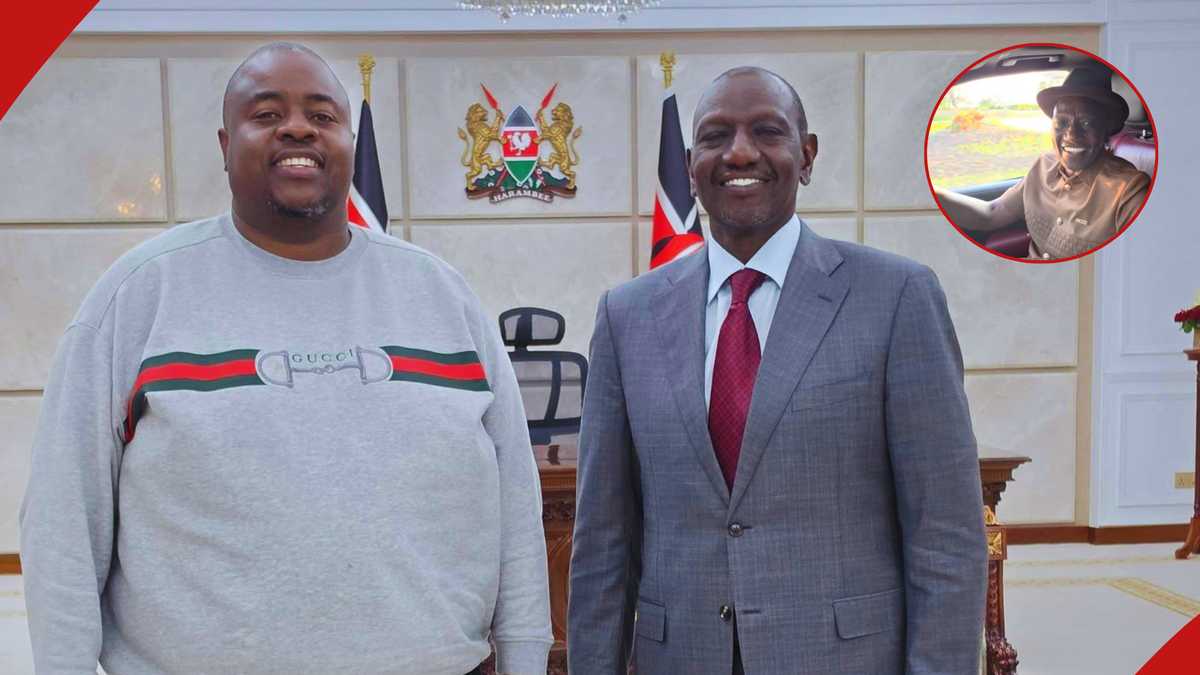
Zimbabwean businessman Wicknell Chivayo has died in a helicopter crash in Marondera, Zimbabwe, together with his wife, Lucy “Lulu” Muteke, and other people who were aboard the aircraft.
The fatal helicopter accident happened on Wednesday, September 30, 2026, in the Marondera Rural area of Mashonaland East Province, east of Zimbabwe’s capital, Harare. Zimbabwean authorities confirmed that there were no survivors.
Chivayo’s death has attracted widespread attention in Kenya because of his highly publicised relationship with President William Ruto. The Zimbabwean businessman had made several appearances alongside the Kenyan President at State House, private engagements and other high-profile occasions in Kenya.
The circumstances surrounding the helicopter crash remained under investigation as of October 1, 2026, with authorities yet to establish and publicly announce the cause of the accident.
Wicknell Chivayo Dies in Marondera Helicopter Crash
The helicopter carrying Chivayo and five other people crashed at approximately 5pm on Wednesday in the Marondera Rural area.
Police and government officials confirmed that six people were aboard the aircraft and that there were no survivors. The crash occurred in the vicinity of a farm near Waddilove Mission, according to Zimbabwean media reports.
Chivayo and his wife were subsequently identified among those who died in the accident. Family spokesperson Herbert Chivayo also confirmed the deaths of the businessman and Lucy Muteke.
Government spokesperson Nick Mangwana said the aircraft was carrying a high-profile businessman, three other passengers and two pilots. Emergency personnel were dispatched to the crash site as authorities began working to establish the identities of those who had died.
The crash reportedly occurred after the aircraft had taken off from the Gandami area of Chikomba, where Chivayo and his wife were developing a rural home.
At the time of publication, there was no confirmed official explanation of what caused the helicopter to crash.
Who Was Wicknell Chivayo?
Wicknell Chivayo was one of Zimbabwe’s most recognisable businessmen, particularly because of his involvement in energy and infrastructure projects, his public philanthropic activities and his close relationships with senior political figures.
He was the founder of Intratrek Zimbabwe, a company associated with major infrastructure and energy projects in the country.
One of the most prominent projects linked to Chivayo was the 100-megawatt Gwanda Solar Project in Matabeleland South. The project was initially awarded to Intratrek and later became the subject of prolonged contractual and legal disputes.
The Gwanda project remained a major part of Chivayo’s public business profile. In September 2026, Intratrek received a government Notice to Proceed for the project, with the contractor expected to complete the solar plant within 24 months.
The project was designed to increase Zimbabwe’s electricity-generation capacity at a time when the country continued to experience significant power challenges.
Wicknell Chivayo and President William Ruto
Chivayo became increasingly familiar to Kenyans because of his publicly documented relationship with President William Ruto.
The businessman repeatedly shared photographs and videos of himself with Ruto, including encounters at State House in Nairobi and at the President’s private residence in Kilgoris.
His meetings with the Kenyan President attracted significant public interest, particularly because Chivayo was not a Kenyan government official but a Zimbabwean businessman with business interests across the region.
The relationship became more visible throughout 2025 and 2026, with Chivayo appearing at several engagements involving Ruto.
In one widely circulated August 2026 encounter, Chivayo filmed Ruto driving him towards a helipad at the President’s residence in Kilgoris.
Chivayo also publicly described Ruto as a friend and frequently spoke about investment, renewable energy and business opportunities across Africa.
The repeated public appearances led Kenyan media outlets to closely follow the relationship between the two men.
President Ruto Mourns Wicknell Chivayo
President William Ruto has mourned Chivayo following news of the helicopter crash.
Ruto described the Zimbabwean businessman as his friend and said Chivayo’s death was a painful loss to his family, friends and those who knew him.
The President said he would remember Chivayo for his friendship, energy and belief in Africa’s potential.
Ruto also extended condolences to the families of those who died in the crash, as well as to Zimbabwean President Emmerson Mnangagwa and the people of Zimbabwe.
The message underlined the close personal relationship that had become increasingly visible through the two men’s public interactions in recent years.
Wicknell Chivayo’s Business Career
Chivayo’s business career was strongly associated with Zimbabwe’s energy and infrastructure sectors.
Through Intratrek Zimbabwe, he became linked to the Gwanda Solar Project, one of the country’s most closely watched renewable-energy developments.
The solar project was initially valued at more than US$170 million and was intended to generate 100 megawatts of electricity.
Its implementation was delayed for years amid disputes between Intratrek and Zimbabwe Power Company. The dispute resulted in prolonged litigation before the project was eventually restructured.
By September 2026, the Zimbabwean government had given the project a new push, with Intratrek receiving a Notice to Proceed.
Chivayo had also publicly expressed his willingness to personally finance the project, saying he wanted to help overcome the funding challenges that had contributed to delays.
Chivayo’s Public Profile and Philanthropy
Beyond his business activities, Chivayo became widely known for his extravagant lifestyle and highly publicised acts of giving.
He frequently used social media to showcase luxury vehicles, expensive properties, private aviation and interactions with celebrities, religious leaders, sports personalities and political figures.
His philanthropic gestures also made him a prominent social-media personality in Zimbabwe.
The combination of business, wealth, philanthropy and political connections made Chivayo one of the most recognisable Zimbabwean businessmen of his generation.
His public profile extended beyond Zimbabwe, particularly after his repeated interactions with leaders and prominent figures elsewhere in Africa.
Chivayo’s Business and Political Connections Attracted Scrutiny
Chivayo’s rise also generated scrutiny over some of the government contracts and business dealings associated with his companies.
The Gwanda Solar Project, in particular, became the subject of public debate because of the lengthy delays and legal disputes surrounding its implementation.
Different investigations, court proceedings and public accounts have presented differing interpretations of the issues surrounding the project and Chivayo’s business dealings.
Chivayo and his companies denied wrongdoing in cases where allegations were made against them.
The distinction is important because allegations, investigations and political commentary should not be treated as established findings unless supported by a final legal or official determination.
Gwanda Solar Project Was Still Active Before His Death
One of the most significant developments involving Chivayo before his death was the revival of the Gwanda Solar Project.
Zimbabwean authorities issued Intratrek with a Notice to Proceed in September 2026, signalling a renewed effort to complete the long-delayed 100MW solar plant.
The project had originally been awarded years earlier but became stalled by contractual disagreements, legal proceedings and financing challenges.
Its revival meant that Chivayo remained directly connected to one of Zimbabwe’s most important renewable-energy projects until the final weeks of his life.
The project’s future could now attract additional attention following his death, particularly regarding the company’s management and the implementation of the government-approved construction programme.
What Happened During the Helicopter Crash?
According to information released by Zimbabwean authorities, the helicopter crashed at around 5pm on September 30, 2026.
The aircraft was carrying six people, including four passengers and two pilots.
The crash happened in the Marondera Rural area, with emergency services responding to the scene.
Authorities confirmed that nobody survived.
Chivayo and his wife were later identified among the victims, while the identities of the other people aboard were being handled by the relevant authorities and their families.
The crash investigation is expected to examine the aircraft, flight conditions, maintenance history, pilot information and other circumstances surrounding the flight.
No definitive cause should be assigned to the crash until investigators release their findings.
Wicknell Chivayo’s Death Sends Shockwaves Across Zimbabwe and Kenya
The death of Wicknell Chivayo has generated reactions in both Zimbabwe and Kenya because of his extensive public profile and regional connections.
In Zimbabwe, attention has focused on the loss of a businessman who had become associated with major energy projects, philanthropy and high-profile political relationships.
In Kenya, the focus has largely been on his friendship with President William Ruto and the numerous public appearances they shared.
Chivayo’s death also comes at a significant moment for his business interests, particularly the Gwanda Solar Project, which had only recently received a renewed government push.
As authorities investigate the helicopter crash, questions surrounding the aircraft, the flight and the circumstances leading to the accident are expected to remain a major part of the story.
For now, the confirmed facts are that a helicopter carrying six people crashed in Marondera on September 30, 2026, killing everyone aboard, including Wicknell Chivayo and his wife, Lucy Muteke.
The cause of the crash had not been officially established by October 1, 2026.
President Ruto’s public tribute has also highlighted the extent to which Chivayo had become a familiar figure in Kenya’s political and business circles before his death.