In decentralized finance, a transaction can fail safely—or succeed exactly as written and still leave you worse off. That counterintuitive distinction is why risk assessment cannot stop at asking whether a protocol is popular, audited, or locked with substantial capital. The more useful question is whether you understand the complete path from your signature to the final state of your assets.
DeFi users often separate “protocol risk” from “wallet security,” as though one belongs to developers and the other belongs to individuals. In practice, the boundary is porous. A smart contract may behave as designed while a malicious interface, deceptive approval, manipulated price, or unexpected route causes an economically harmful result. For users in the United States managing multiple EVM networks, a capable wallet is therefore not merely a key holder. It can become an important layer of transaction interpretation and risk control.
How DeFi risk evolved from code risk to system risk
Early discussions of DeFi security focused heavily on smart-contract bugs: flawed arithmetic, unauthorized access, broken accounting, or an incorrect assumption about token behavior. Those risks remain fundamental. A contract is not made safe by being decentralized; its rules are executed automatically, including rules that contain an error.
As DeFi became more composable, however, the risk surface widened. A lending market may depend on an oracle. A decentralized exchange may route through several pools. A yield strategy may deposit into other protocols, rebalance positions, and issue a receipt token whose value depends on multiple assumptions. Each component can work locally while the combined system remains fragile.
This is the first useful mental model: assess not only the protocol, but the transaction graph. The graph includes the application, contracts, tokens, price feeds, bridges, approvals, account permissions, and the wallet interface through which the user signs. A weakness at any point can change the meaning of an otherwise familiar action.
That does not mean every transaction requires a formal audit. It means labels such as “swap,” “stake,” or “claim” are insufficient descriptions. The economic result depends on what the transaction actually authorizes, which assets it can move, how much slippage is permitted, and whether a contract can retain permission after the immediate action.
The four layers of a practical risk assessment
1. Smart-contract and governance risk
Start with the code and the authority structure. Is the contract immutable, upgradeable, or controlled by an administrator or multisignature? Upgradeability can be useful: it may allow a team to repair a discovered vulnerability. It also introduces trust, because an authorized change can alter behavior after users deposit funds.
Governance deserves separate attention. A protocol may have decentralized voting yet still be influenced by concentrated token ownership, short voting periods, or emergency powers. The relevant question is not whether governance exists, but who can change the rules, under what conditions, and how much notice users receive.
2. Economic and market risk
A secure contract can still produce losses through market mechanics. Liquidity may be thin, making a large trade move the price. A lending position may be liquidated when collateral falls below a threshold. An automated market maker can expose liquidity providers to divergence between deposited assets and simply holding them. Yield is compensation for bearing some combination of these risks; it is not evidence that risk has disappeared.
Oracles create another boundary condition. A protocol may rely on a price that is delayed, manipulable in a thin market, or temporarily inconsistent with prices elsewhere. The danger is greatest when the system allows users to borrow heavily against an overstated collateral value or withdraw assets at a price that does not reflect executable market liquidity.
3. Operational and interface risk
Users interact with DeFi through websites, browser extensions, mobile apps, and wallet prompts. The interface is a translation layer between human intention and machine-executable instructions. Translation can fail through phishing, domain impersonation, misleading labels, compromised front ends, or an approval that grants broader spending authority than the user expects.
This is where transaction simulation becomes useful. A simulation attempts to estimate the state change produced by a proposed transaction before it is broadcast. Instead of relying only on a button labeled “Confirm,” the user may be able to inspect which tokens leave the wallet, which assets arrive, whether a balance changes unexpectedly, and whether the transaction reverts under the current conditions.
Simulation is not a crystal ball. It depends on the state used for the estimate and may not capture every future event, off-chain action, miner or validator ordering effect, oracle update, or failure in a separate contract interaction. Still, it changes the user’s task from trusting a label to reviewing an expected outcome. That is a meaningful improvement in decision quality.
4. Key, approval, and account risk
Private-key security remains the foundation. If an attacker controls the signing key, protocol analysis may become irrelevant. But approvals create a subtler issue: a wallet can remain uncompromised while a previously granted token allowance gives a contract continuing permission to spend a particular asset.
Users should distinguish between signing a one-time transfer and granting a reusable allowance. The latter can persist after the original trade or deposit. Periodically reviewing and reducing unnecessary approvals is a practical control, especially for wallets used across many applications. Separate accounts for long-term holdings, active DeFi positions, and experimental applications can also reduce the impact of a mistake, though compartmentalization does not replace careful signing.
What an advanced wallet can—and cannot—do
A security-oriented Web3 wallet can make risk more visible at the moment when the user still has a choice. Address warnings, token-spending alerts, chain identification, simulation, and clearer asset-flow displays can help expose discrepancies between intention and execution. For users exploring Ethereum and other EVM chains, these features are particularly valuable because similar addresses, contracts, and token names can appear across networks while having entirely different risk profiles.
A practical wallet workflow should begin before the transaction prompt. Confirm the network, verify the application domain through a trusted route, inspect the recipient or spender, and check whether the requested permission matches the action. Then review the simulated result: outgoing assets, incoming assets, balance changes, approvals, and any warnings. If the transaction is more complex than the interface description suggests, pause rather than treating complexity as normal.
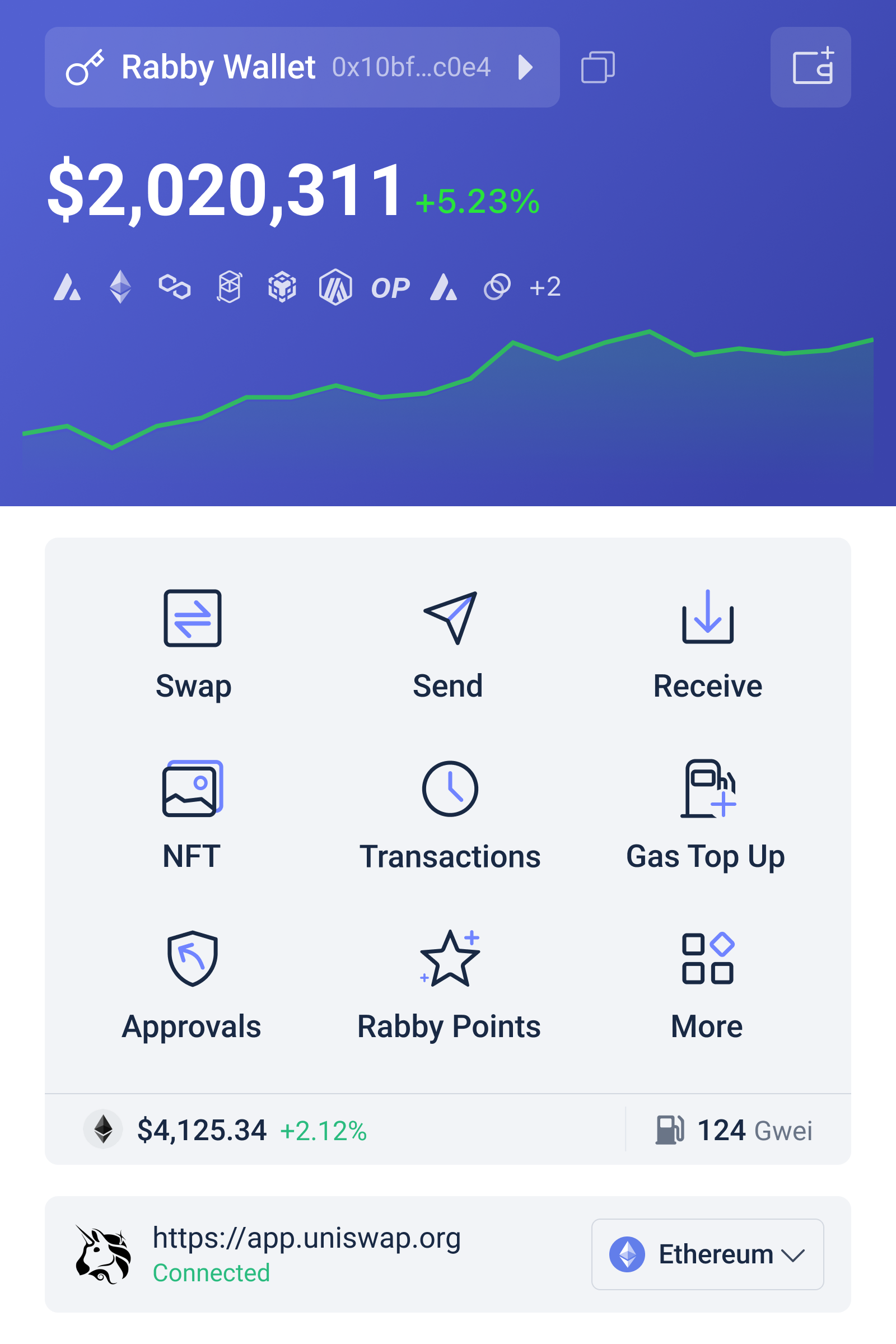
Using a rabby wallet can support this kind of review by placing transaction interpretation and security checks closer to the signing decision. The benefit is not that a wallet can guarantee safety. Its benefit is reducing information asymmetry: the user receives more context about what the blockchain is being asked to do.
The limitation matters. Wallet warnings are detection tools, not insurance. A newly deployed contract may have no meaningful reputation history. A legitimate contract may be economically dangerous under unusual market conditions. A simulation can show an apparently favorable result that changes before confirmation or settlement. Good tooling improves the signal; it does not remove uncertainty.
A reusable framework for deciding whether to sign
Before approving a DeFi transaction, ask five questions. First, what exact state change do I want? “Earn yield” is a goal, not a transaction description. Second, which contracts will receive authority or assets? Third, what assumption makes the strategy work—stable prices, deep liquidity, a functioning oracle, or a particular governance decision? Fourth, what is the worst plausible loss, including liquidation or loss of access? Fifth, how would I exit if the market moved or the application became unavailable?
This framework separates operational risk from economic risk. A transaction can be technically safe but economically unsuitable. Conversely, a volatile strategy can be understood and deliberately sized while a seemingly simple approval may create an unnoticed permission problem. The distinction is useful because different controls address different failures: simulation helps with execution visibility, position sizing helps with market exposure, and approval management helps with persistent permissions.
For US users, tax and reporting consequences may also depend on the nature and timing of swaps, rewards, liquidity activity, and disposals. Those questions are jurisdiction-sensitive and can change with facts that a wallet cannot determine. Transaction safety and legal or tax treatment are separate assessments, even when they arise from the same on-chain activity.
What matters next
The recent positioning of Rabby Wallet around Ethereum, EVM networks, simplicity, speed, and on-chain security reflects a broader shift in the category. Wallets are moving from passive signing tools toward transaction-aware interfaces. If that direction continues, the most valuable feature may not be another asset list or network selector, but better explanations of permission scope, dependencies, and expected outcomes.
The open question is how far these tools can go without creating false confidence. More warnings can overwhelm users; fewer warnings can miss important context. Simulations can be highly informative while remaining conditional estimates. The strongest future designs will likely make uncertainty visible rather than hiding it behind a green safety signal.
For now, the disciplined approach is straightforward: treat every signature as an authorization event, every DeFi strategy as a bundle of assumptions, and every wallet warning as evidence to investigate rather than a final verdict. Risk assessment becomes more reliable when the user examines both what the code will do and what the surrounding market system must do for the position to remain safe.
FAQ
Does transaction simulation guarantee that a DeFi transaction is safe?
No. Simulation estimates the result using available blockchain state, but conditions can change before confirmation. It may also fail to represent every off-chain dependency, ordering effect, oracle update, or economic risk. It is best understood as an additional review layer, not a guarantee.
What is the most commonly overlooked DeFi risk?
Persistent permissions are often overlooked. A token approval may allow a contract to spend assets later, subject to the allowance, even after the original interaction is complete. Users should review approvals and avoid granting broader permissions than the intended activity requires.
Can a reputable protocol still cause a loss?
Yes. Reputation may reduce some operational or code-related concerns, but it cannot remove market volatility, liquidation, slippage, oracle dependence, governance changes, or broader ecosystem failures. Protocol quality and suitability for a particular risk tolerance are different questions.