Fact-checking has become an increasingly important civic skill in Kenya as social media platforms play a larger role in how people receive, discuss and share information. The shift from traditional media to digital platforms has created new opportunities for citizens to access information quickly, but it has also made it easier for misinformation, disinformation and other forms of information disorder to circulate widely.
The challenge is no longer simply whether fact-checkers can identify false or misleading claims. It is whether ordinary citizens have the digital literacy, access, confidence and practical tools required to question information before believing or sharing it.
This distinction is becoming increasingly important as Kenya approaches another major electoral cycle. Digital literacy and fact-checking cannot operate as separate interventions. They need to form part of a broader civic information ecosystem capable of reaching people across age groups, income levels, locations and levels of digital access.
The Growing Importance of Fact-Checking in Kenya
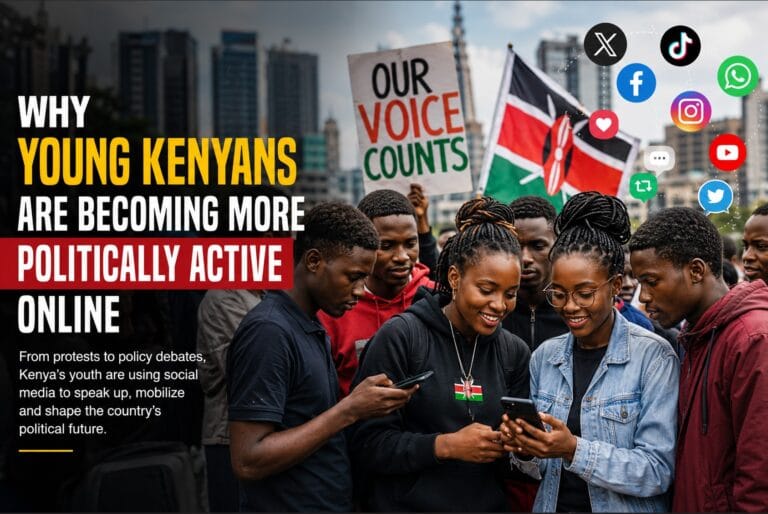
Social media has changed the relationship between citizens and information.
Instead of relying exclusively on television, radio and newspapers, many Kenyans now encounter information through social networking platforms and messaging applications. This means that an individual can receive a political claim, photograph, video or sensational headline directly from a friend or relative before encountering it through a professional news organisation.
That speed creates a serious verification challenge.
A misleading post can be copied, screenshotted and forwarded repeatedly before a fact-checking organisation has had an opportunity to investigate the original claim. By the time a correction appears, the initial information may already have reached thousands of people.
The problem is further complicated by the fact that not every false claim is completely fabricated. Some information may contain a genuine photograph accompanied by a false caption, an authentic quotation presented without context, an old video presented as a recent event, or a legitimate news report altered to create a different meaning.
This is why digital literacy needs to go beyond teaching people to identify something that “looks fake.”
Misinformation, Disinformation and Mal-information Are Not the Same
The public conversation frequently uses “fake news” as an umbrella term, but information disorders can take different forms.
Misinformation generally refers to false or misleading information shared without necessarily establishing an intention to deceive.
Disinformation refers to false or misleading information deliberately created or distributed to deceive people or cause harm.
Mal-information involves genuine information that is used in a harmful or misleading context, including information that may be manipulated, selectively presented or deliberately taken out of context.
These distinctions matter because different forms of information disorder require different responses.
A person who unknowingly forwards an inaccurate WhatsApp message needs a different intervention from an organised actor deliberately manufacturing false information. Similarly, an authentic photograph being used to create a false narrative requires verification of context rather than simply asking whether the photograph itself is genuine.
The broader challenge is that repeated exposure to information disorders can also weaken public confidence in legitimate information. When people repeatedly encounter contradictory claims, they may begin to treat truthful reporting and fabricated information with similar levels of suspicion.
Digital Literacy Is More Than Knowing How to Use a Smartphone
Being able to operate a smartphone does not automatically make someone digitally literate.
Digital literacy involves the ability to find, evaluate, interpret and responsibly share information online. It includes understanding who produced a piece of content, why it was produced, whether the evidence supports the claim and whether independent sources confirm it.
A digitally literate social-media user should be able to pause before forwarding a sensational message and ask basic questions:
- Who originally published this information?
- When was it published?
- Is the information current?
- What evidence supports the claim?
- Are credible independent sources reporting the same thing?
- Has an image or video been taken from an older event?
- Is the headline consistent with the actual story?
- Could the information be satire, opinion or manipulated content?
- Who benefits if people believe or share the claim?
These questions can sometimes prevent misinformation from travelling further without requiring sophisticated technical knowledge.
The Digital Divide Limits Fact-Checking Campaigns
One of the biggest challenges facing digital literacy programmes in Kenya is the country’s digital divide.
Training people to use online verification tools is useful only when those people can access the necessary technology and connectivity.
Some Kenyans are highly active on smartphones and social media, while others have limited internet access, limited digital skills or no smartphone access at all. This creates a difficult paradox: some of the communities that could benefit from greater information-literacy support may be among those least likely to encounter formal online fact-checking campaigns.
The problem is particularly important outside major urban centres.
A digital literacy campaign that depends entirely on smartphone applications, online workshops and social-media content may struggle to reach communities where internet access is expensive, inconsistent or unavailable.
Geographical barriers can add another layer to the problem. Community-based organisations attempting to conduct physical outreach may encounter poor roads, difficult terrain and limited network coverage.
Consequently, fact-checking programmes need both digital and offline strategies.
Radio, community meetings, schools, churches, youth groups, local organisations and community leaders can complement online interventions and extend information-literacy education beyond people already comfortable with digital platforms.
Fact-Checking Tools Are Useful, But Access Alone Is Not Enough
Kenya’s fact-checking ecosystem has increasingly incorporated digital tools that can help users investigate suspicious claims.
One example is Hakikisha, a Kenyan information-verification platform developed to help users submit claims and access verification. Its current platform combines AI-assisted analysis with human fact-checking and allows claims to be submitted in formats including text, images and URLs.
Reverse-image search tools can also help users investigate photographs circulating online. Google’s image-search technologies can assist in finding visually similar images or tracing where an image has appeared previously, while TinEye provides another reverse-image-search option.
However, knowing that these tools exist is not the same as knowing how to use them effectively.
A fact-checking workshop therefore needs to move beyond demonstrating a tool once. Participants need practical exercises in which they investigate real examples, identify the original source, compare dates, examine context and distinguish between evidence and speculation.
The objective should be to develop a habit of verification, rather than simply teaching people where to click.
Why Rural Communities Should Be Part of Kenya’s Digital Literacy Strategy
Digital literacy programmes can unintentionally reproduce existing inequalities if they concentrate primarily on urban populations.
People living in rural areas should not be treated as passive recipients of information. They are active participants in Kenya’s information ecosystem and may encounter misinformation through social media, messaging platforms, radio, community networks and interpersonal communication.
A rural resident may receive a claim through a WhatsApp group, hear the same claim discussed at a local gathering and later encounter a related version on Facebook or TikTok.
The information ecosystem therefore does not stop at the smartphone.
Fact-checking campaigns need to recognise the role of community networks and develop approaches that work even where connectivity is limited.
Offline educational materials, vernacular-language content, community radio programming and face-to-face training can help extend digital-literacy principles beyond areas with reliable broadband.
Research Shows a Gap Between Fact-Checkers and Everyday Social Media Users
Research involving Kenya and Senegal provides an important insight into why some fact-checking and media-literacy campaigns struggle to connect with audiences.
A 2025 study published in the International Journal of Communication examined interviews with media professionals, policy and media experts and social-media users in the two countries. The researchers found differences in how the groups conceptualised misinformation. Media professionals and experts tended to associate misinformation with news and false information, while social-media users were more likely to understand it through everyday experiences, including scams and information encountered in daily life.
The study involved 91 in-depth interviews, including 24 social-media users in Kenya and 26 in Senegal, alongside media professionals and policy/media experts. The researchers also found that interviewed social-media users rarely sought out fact-checks or media-literacy messages.
That finding has important implications for Kenya.
If fact-checkers communicate primarily through the language and formats of professional journalism, they may fail to connect with people who do not think about misinformation as a journalism problem.
For an ordinary social-media user, misinformation may be the suspicious investment opportunity forwarded by a relative, a fabricated job advertisement, an altered photograph, a false government announcement or a misleading message circulating in a family group.
The response must therefore start with the information experiences of citizens themselves.
WhatsApp Groups Are Part of the Information Ecosystem
Public discussions about misinformation often focus heavily on Facebook, TikTok, X and other highly visible platforms.
But private messaging environments deserve equal attention.
WhatsApp groups can connect families, friends, workplaces, religious communities, neighbourhood associations and professional networks. Information shared within those groups can carry a strong level of interpersonal trust because recipients know the person forwarding the message.
A message introduced with “my friend in government has confirmed this” can therefore appear more credible to a recipient than an unfamiliar article from a news website.
This is where digital literacy becomes a social skill.
People need to understand that trusting the person who sent a message does not automatically mean the information itself has been verified.
Instead of telling users simply to distrust WhatsApp, literacy programmes can teach them how to respond constructively:
“Let us verify this before we forward it.”
That simple behavioural change can turn ordinary social-media users into part of the verification process.
UNESCO and Youth-Led Digital Literacy Efforts
Efforts to address the problem are already emerging.
UNESCO has supported initiatives focused on media and information literacy, digital rights, online safety and the challenges associated with misinformation and harmful digital content. Such programmes reflect a broader recognition that young people need practical skills for navigating increasingly complex information environments.
Youth-focused initiatives are particularly important because young people are among the most active participants in digital spaces.
But digital literacy cannot be reduced to a classroom lecture.
Training needs to use the platforms young people already understand, including WhatsApp, Facebook, Instagram, TikTok and other social platforms. Lessons become more meaningful when participants can analyse the kinds of posts, videos, screenshots and messages they actually encounter.
The same principle applies to older audiences.
A farmer, trader, parent, teacher, religious leader or community health worker may interact with misinformation differently from a university student in Nairobi. Effective media literacy must therefore reflect people’s different information environments.
Fact-Checking Ahead of Kenya’s 2027 Election
The relationship between digital literacy and elections makes the issue particularly significant in Kenya.
Election periods can produce large volumes of political claims, manipulated images, misleading statistics, fabricated quotations and impersonation attempts.
The speed of social media can amplify these narratives rapidly.
Fact-checking organisations can investigate and publish corrections, but corrections alone cannot solve the problem. Citizens need the ability to recognise suspicious information before it spreads and understand where to find reliable evidence.
This makes media and information literacy an important component of electoral resilience.
The goal should not be to tell citizens what political position to adopt. Instead, citizens should have the skills necessary to examine political claims independently and make their own judgments based on evidence.
That distinction is essential in a democratic society.
The Public Needs More Than Fact-Checking Links
A common weakness in information-literacy campaigns is assuming that publishing a correction automatically changes people’s beliefs.
Evidence from research in Kenya suggests that audience behaviour is more complicated.
The 2025 audience-agency study found that social-media users reported relatively little engagement with fact-checks and media-literacy messages, even though some participants believed they had the ability to respond to misinformation.
This suggests that access to fact-checking is not identical to use of fact-checking.
A person may have access to a fact-checking organisation but never visit its website.
They may have a smartphone but lack the confidence to investigate a photograph.
They may know that misinformation exists but still forward an emotionally compelling message without checking it.
The missing ingredient is often behaviour.
Building a Culture of “Pause, Check and Share”
Kenya could benefit from promoting a simple verification culture based on three actions:
Pause.
Do not immediately forward emotionally charged or sensational information.
Check.
Look for the original source, date, context and independent evidence.
Share responsibly.
Only forward information after establishing that it is sufficiently credible, and correct misinformation when reliable evidence demonstrates that a previous claim was false or misleading.
This approach is easier to communicate than complicated definitions and can be adapted for schools, workplaces, churches, community groups and social-media campaigns.
Fact-Checking Must Be Designed Around Real Communities
The next stage of Kenya’s digital-literacy agenda should focus on accessibility.
Training should be available in languages people understand and through channels they already use. Where internet access is limited, offline approaches should complement digital programmes.
Community radio could play an important role by explaining common misinformation tactics and demonstrating simple verification techniques.
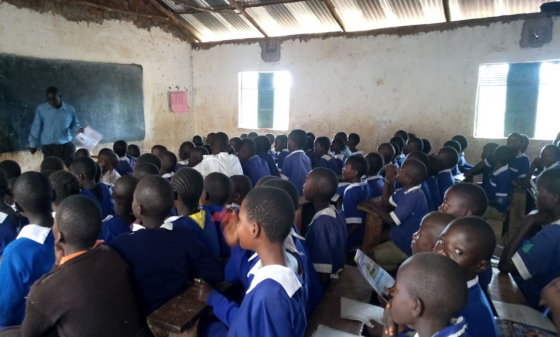
Schools can teach verification skills early, but education should not stop at students. Parents, community leaders and older adults also need opportunities to learn how digital information is produced and manipulated.
Libraries, churches, youth organisations, community-based organisations and local media outlets can provide additional points of contact.
This approach would move fact-checking from being something performed by professional organisations for citizens to a civic skill practiced by citizens.
Technology Should Support Human Judgment, Not Replace It
Artificial intelligence is creating both new challenges and new opportunities in the fight against misinformation.
AI can help analyse large volumes of content and identify patterns that require investigation. Platforms such as Hakikisha are already combining AI-supported capabilities with human review.
At the same time, AI-generated images, audio and video can make verification increasingly difficult.
This means digital literacy programmes need to teach people not to treat technology as an automatic truth detector.
An AI-generated answer can be wrong. A reverse-image search can identify an earlier appearance of an image without necessarily proving the context of its current use. A search result can also contain unreliable information.
Human judgment remains essential.
The most effective approach is therefore likely to combine technology, professional verification and informed citizens.
Sustainable Funding Is Essential
Another challenge is sustainability.
Many media-literacy projects are launched around elections, emergencies or donor-funded programmes. Such interventions can provide valuable training, but information disorders do not disappear when a project ends.
Digital literacy needs continuity.
Training should be refreshed as platforms change, new technologies emerge and new forms of manipulation become common.
Sustained investment would allow organisations to train community trainers who can continue teaching verification skills after the original programme ends.
It would also help build local capacity rather than relying exclusively on short-term campaigns.
Kenya Needs a Whole-of-Society Approach to Information Integrity
The scale of the challenge means that no single institution can solve Kenya’s misinformation problem.
Newsrooms have a role in producing accurate journalism. Fact-checkers investigate claims. Technology companies control important aspects of platform design and content distribution. Government institutions have responsibilities around public communication and access to reliable information. Schools and universities can strengthen media literacy. Civil-society organisations can reach communities that formal institutions may miss.
Citizens themselves are also part of the information ecosystem.
Research on Kenya’s 2022 election has explored alternative approaches to debunking misinformation, including “social truth queries” designed around questions that encourage audiences to consider whether a claim is accurate. A study involving approximately 4,000 Kenyan participants found that the approach reduced perceived accuracy of targeted electoral misinformation, although the reported effects were small and did not reduce sharing propensity.
The lesson is not that one technique will solve the problem. Rather, it demonstrates the importance of developing responses around how ordinary people actually encounter and process information.
From Fact-Checking to Information Resilience
Kenya’s long-term objective should be broader than producing more fact-checkers.
The country needs more citizens who understand how information works.
A resilient information environment is one in which people know that a viral post is not automatically true, understand that photographs can be reused out of context, recognise that emotionally provocative claims deserve additional scrutiny and know where to seek credible evidence.
It is also an environment in which people can disagree about politics, religion, economics or social issues without assuming that every opposing claim is misinformation.
That requires critical thinking rather than automatic distrust.
The distinction is important: digital literacy should help people evaluate information, not simply replace one form of unquestioned trust with another.
The Road Ahead for Kenya’s Digital Literacy Movement
Kenya has developed a growing ecosystem of fact-checkers, media-literacy organisations, researchers and digital verification tools. Platforms such as Hakikisha demonstrate how technology and human review can be combined to help citizens investigate claims.
But the central challenge remains reach.
A highly trained fact-checker cannot individually verify every claim circulating through millions of private conversations. A sophisticated verification application cannot help someone who lacks a smartphone or reliable internet access. A fact-check published online cannot automatically reach someone who never visits the website hosting it.
This is why digital literacy and fact-checking must converge into one broader civic project.
The future of Kenya’s information ecosystem will depend not only on how many professional fact-checkers the country produces, but also on how many ordinary citizens develop the habit of pausing, checking and questioning information before sharing it.
The real measure of success will be reached when verification becomes part of everyday behaviour, in classrooms, newsrooms, WhatsApp groups, churches, workplaces, community meetings and households.
Until then, Kenya risks developing an increasingly sophisticated fact-checking industry without creating an equally broad public culture capable of finding, understanding and using the verification work already being produced.